Alice's Adventures in Wonderland
This project explores how typography alone can be used as a narrative and visual tool. Using an excerpt from Alice in Wonderland, the task was to design a book layout without images or illustrations, relying solely on type to create structure, rhythm, and emphasis.
Print Project
Jan 8, 2025
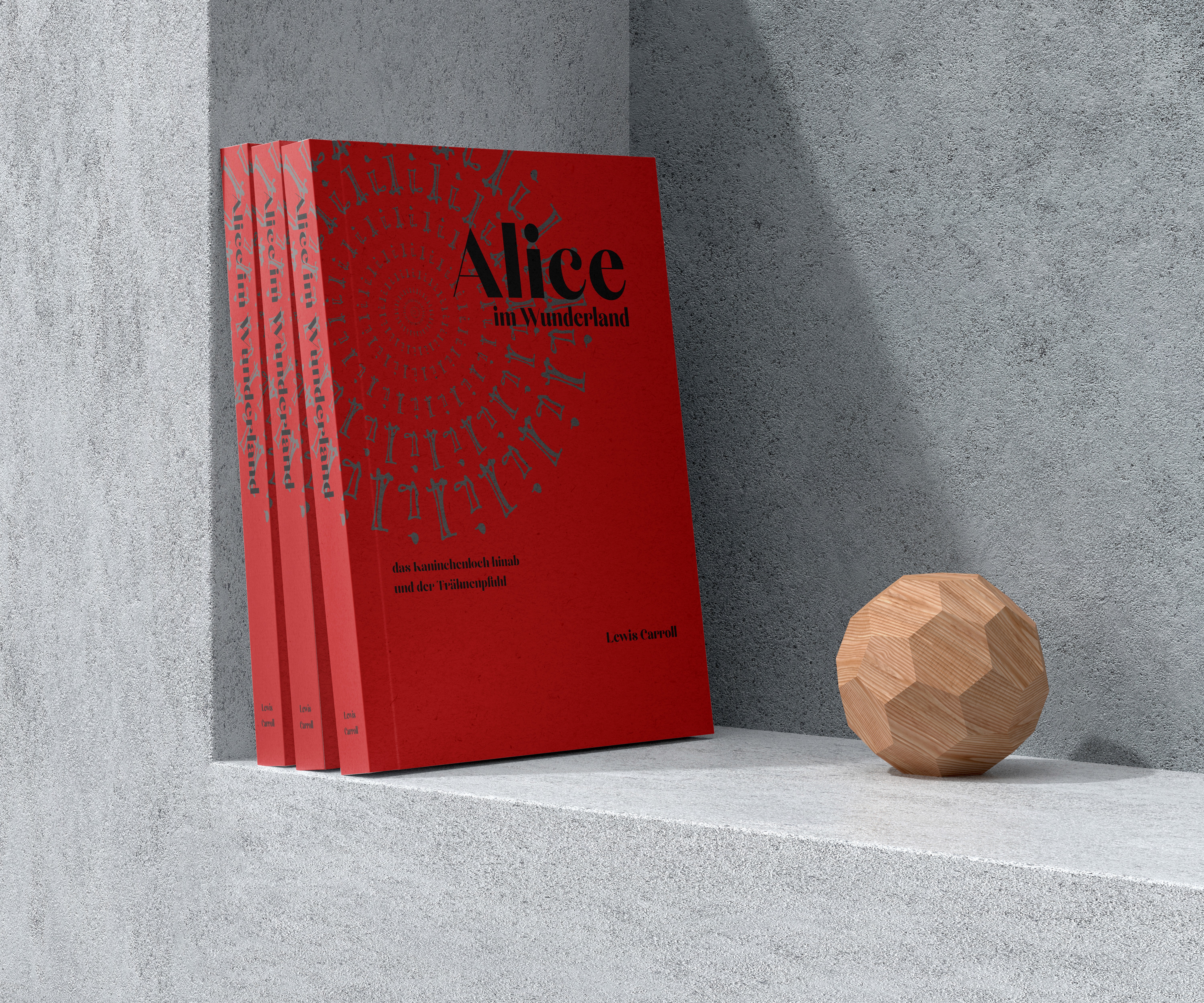
This project explores Alice’s constant loss of control through typography and book design.
Based on Chapter 1 and 2 of Alice in Wonderland, the book translates narrative moments into spatial and typographic interventions rather than illustrations.
The central idea was to treat text as material: words fall, shrink, stretch, collide or form physical structures on the page. Instead of decorating the story, typography becomes part of the narration itself. Key moments — such as falling, becoming smaller, or being displaced — are visualized through typographic systems that interrupt the linear reading flow.
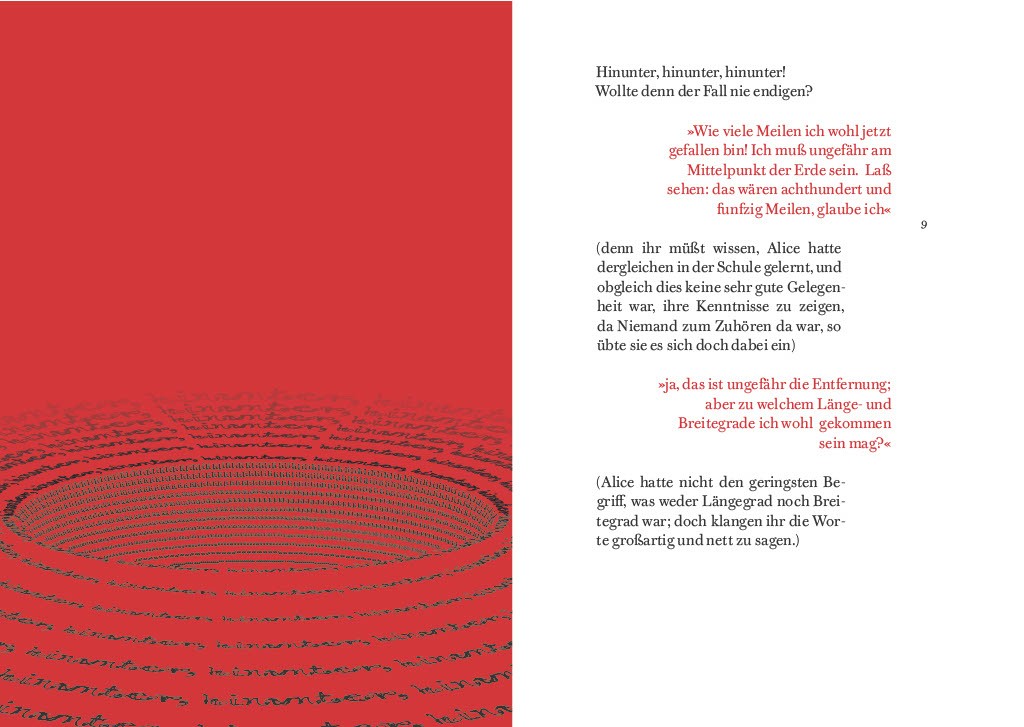
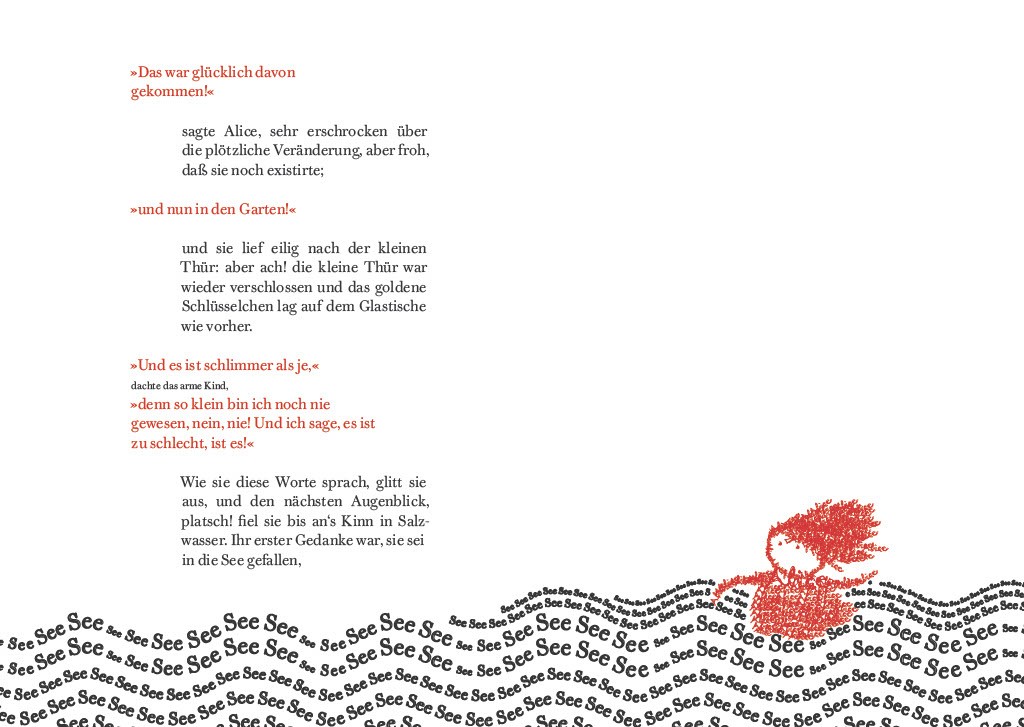
One of the main highlights uses repeated words to create physical metaphors, such as depth, water or fixation, turning the page into a visual space rather than a neutral surface. Large areas of white space were intentionally left empty to allow these typographic images to breathe and to slow down reading.
The book was designed as a printed object, not only as a layout. Decisions about format and paper were made to emphasize process, structure and materiality, keeping the spine visible and reinforcing the idea of exposure rather than concealment.
This project reflects my interest in concept-driven design, experimental typography and the relationship between narrative, space and material.